
How to Create Workout Plans for Clients (Step-by-Step Guide)
Creating effective workout plans is one of the most important skills a personal trainer can develop. A great workout plan does more than tell a client what exercises to perform. It creates structure, builds consistency, drives measurable progress, and gives both the coach and client a clear path forward.
Yet many coaches spend hours creating programs that clients never fully follow. Not because the exercises are wrong, but because the plan isn't built around the client's reality.
In this guide, you'll learn the principles behind building effective workout plans and how to manage them efficiently using ReGains.
Start With the Right Questions
Before you choose exercises, sets, or reps, you need to understand who you're programming for.
Every effective workout plan starts by answering a few key questions:
What is the client's primary goal?
How many days per week can they realistically train?
What equipment do they have access to?
How experienced are they?
Do they have any injuries or movement limitations?
The answers to these questions should shape the entire program.
A fat-loss client training three days per week requires a completely different approach than an advanced lifter preparing for a powerlifting competition.
The goal is not to build the most impressive workout plan.
The goal is to build the right workout plan for that specific client.
Once you understand the client's situation, you can start making decisions about training frequency, exercise selection, volume, and progression.
Consider the Client's Experience Level
Beginners
Beginners don't need complicated programming.
They need:
Consistency
Good exercise selection
Proper technique
Progressive overload
In most cases, fewer exercises produce better results.
Intermediate Lifters
Intermediate clients usually need:
More training volume
Better progression systems
More individualization
At this stage, tracking becomes increasingly important because progress is no longer automatic.
Advanced Lifters
Advanced clients often require:
More specialized programming
Planned progression phases
Closer monitoring of recovery
This is where detailed workout data becomes especially valuable.
Choose the Right Training Split
The best split is usually the one your client can follow consistently.
2 Days Per Week
Full Body
3 Days Per Week
Full Body or Upper/Lower/Full Body
4 Days Per Week
Upper/Lower Split
5–6 Days Per Week
Push Pull Legs or specialized bodybuilding splits
A perfect training split that the client can't follow is less effective than a simple plan they can execute consistently every week.
Build Around Compound Movements
Compound exercises should usually form the foundation of a program.
Examples include:
Squats
Deadlifts
Bench Press
Overhead Press
Pull-Ups
Rows
These exercises allow clients to:
Build strength efficiently
Track progress clearly
Generate more training stimulus
Isolation exercises can then be added to support specific goals.
Define Progression Before Assigning the Workout
Many coaches spend time designing workouts but never define how progression will happen.
Before assigning a plan, ask:
When should the client increase weight?
How will performance be measured?
How will you know when the program needs adjustment?
A workout plan without progression is simply a list of exercises.
The goal is not just to complete workouts.
The goal is to improve performance over time.
Why Workout Tracking Matters
This is where many coaching systems begin to break down.
If a client receives a PDF and records their weights somewhere else, the coach often has limited visibility into what is actually happening.
Important information gets lost:
Missed workouts
Personal records
Exercise feedback
Performance trends
Progress over time
Without data, coaching becomes guesswork.
With data, coaching becomes decision-making.
The more information you collect throughout the training process, the easier it becomes to make intelligent adjustments.
Creating Workout Plans in ReGains
Once you've built a solid foundation, the right software can help you scale it.
A great coaching platform won't fix poor programming, but it can make good programming significantly easier to deliver, track, and improve over time.
Instead of spending hours managing spreadsheets, updating PDFs, and manually tracking client progress, you can focus on coaching while the system handles the administration.
This is where ReGains comes in.
ReGains helps personal trainers turn their programming process into a structured coaching system by combining workout planning, progress tracking, client feedback, and nutrition management in one place.
Step 1: Build Your Exercise Library
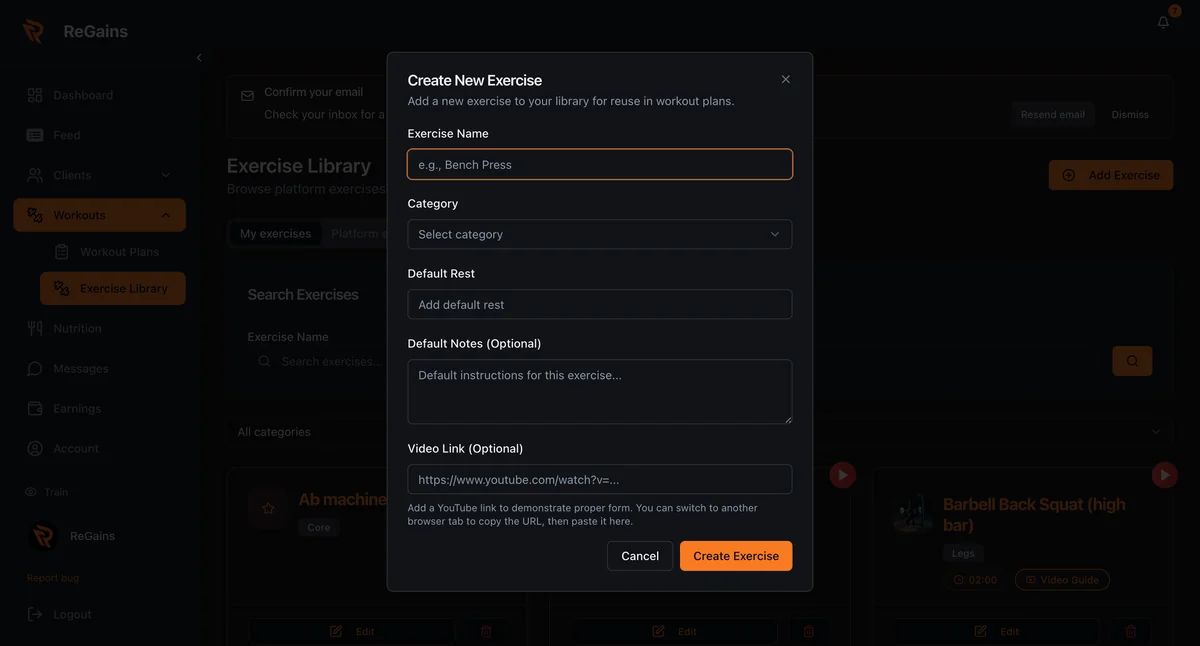
Instead of recreating exercises for every client, ReGains allows you to build your own exercise library.
For each exercise, you can add:
Exercise name
Category
Default notes
Rest periods
Video demonstration links
You can also use the platform's built-in exercise library, which includes exercise demonstrations and pre-built movements.
This allows you to create standardized systems that can be reused across multiple clients.

Step 2: Create Workout Templates
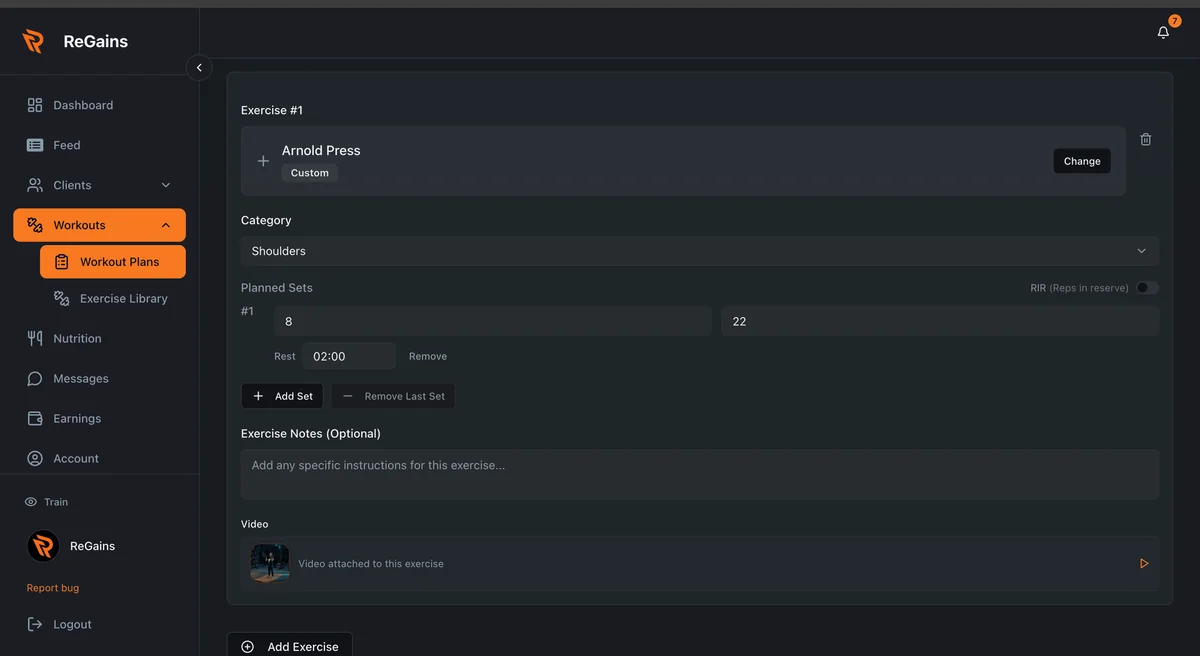
Once your exercises are ready, you can build workout templates.
Each workout can contain:
Exercises
Sets
Reps
Rest periods
Coaching notes
Progression instructions
Rather than building every workout from scratch, templates allow you to create repeatable systems that can be customized for each client.
This saves significant time as your roster grows.

Step 3: Assign Workouts to Clients
One of the biggest advantages of ReGains is how workout assignments work.
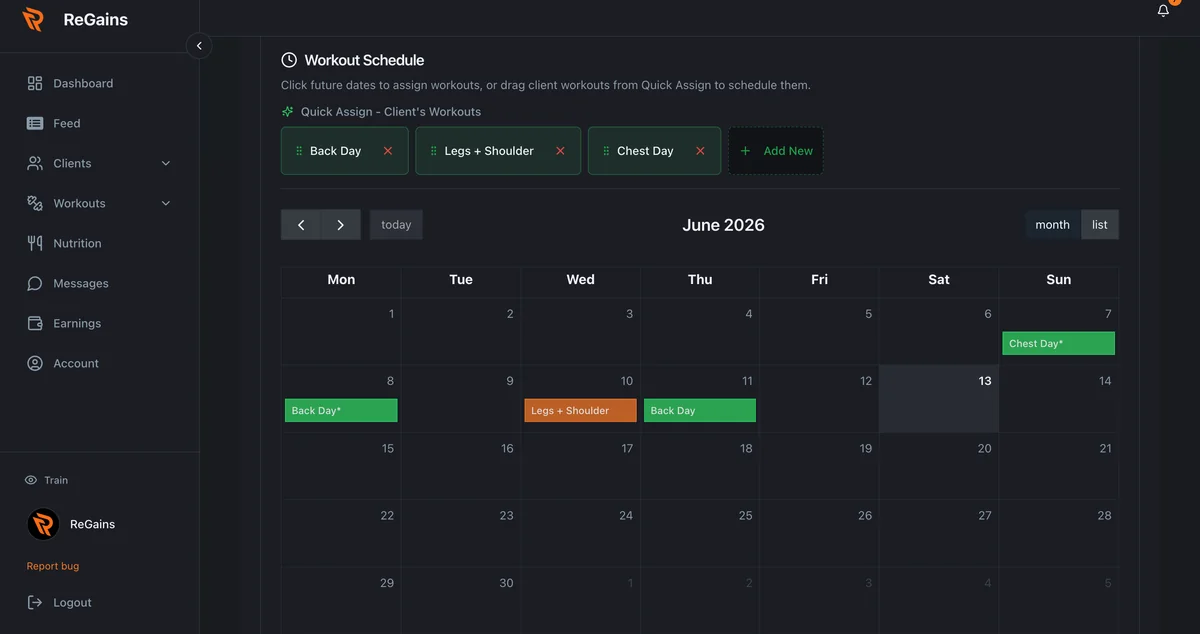
When a coach assigns a workout to a client, ReGains creates a client-specific copy of that template.
This means:
The client can log data independently.
The workout becomes tied to that client's history.
Progress tracking begins immediately.
Workouts can also be scheduled directly inside the client's calendar, giving them a clear training roadmap.
Instead of receiving a static PDF, clients know exactly what they should be doing and when.

Step 4: Let Clients Complete Workouts Inside ReGains
Clients can open their workout directly from their phone and follow it through a mobile-optimized experience.
As they train, they can:
Log weights and reps
Mark completed sets
Watch exercise videos
View previous performance
Leave exercise-specific feedback
Everything happens inside the workout itself, making it easy for clients to stay focused and track their progress as they train.
For example, a client might leave notes such as:
"This felt too easy."
"Shoulder felt uncomfortable."
"Added 5kg today."
These small pieces of feedback help coaches understand what is happening between check-ins and make better programming decisions.
By collecting workout data while training is actually taking place, coaches gain more accurate insights and clients become more engaged in the coaching process.
Step 5: Track Progress Automatically
One of the most powerful aspects of coaching is helping clients see progress.
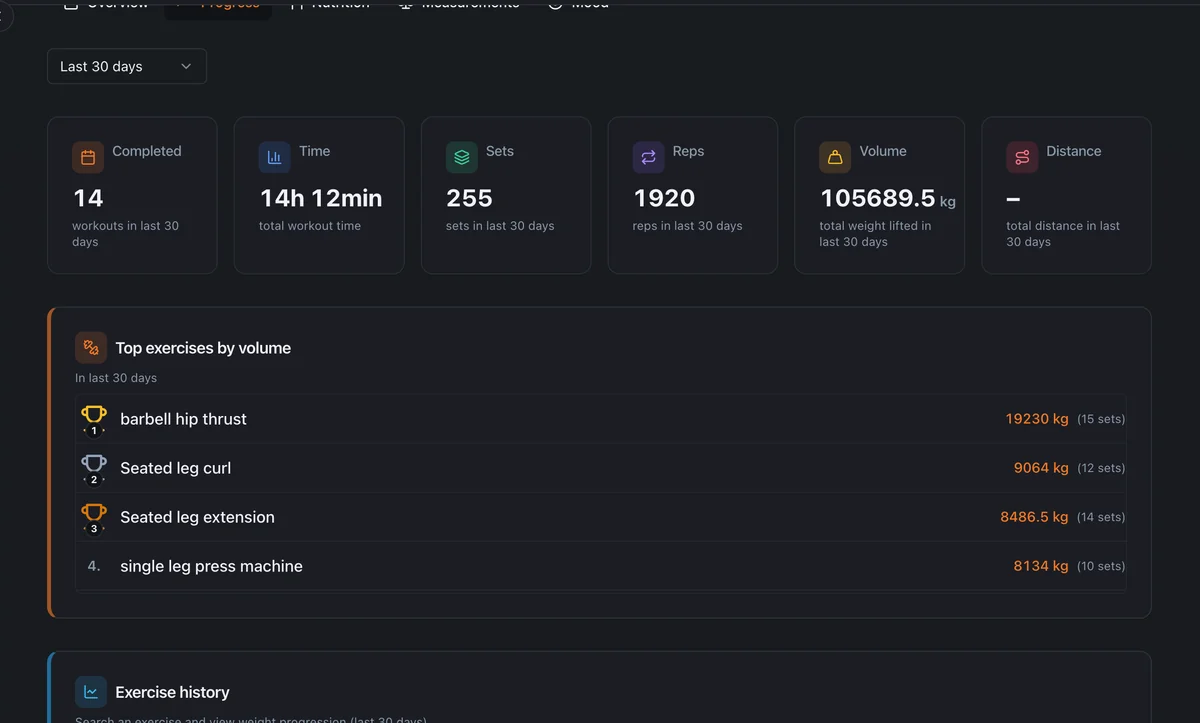
ReGains automatically tracks:
Strength progression
Personal records
Workout completion
Body weight trends
Waist measurements
Adherence
Clients can visualize their progress over time instead of relying on memory.
When people can clearly see improvement, motivation tends to increase.
This creates a positive feedback loop that helps clients stay engaged longer.

Step 6: Turn Coaching Into an Ongoing Process
The best coaching relationships don't feel like a monthly transaction.
They feel like a continuous process.
When clients can:
See their progress
Review previous performances
Log workouts
Track consistency
Receive adjustments based on real data
the value of coaching becomes easier to understand.
Instead of asking themselves whether they should continue next month, continuing becomes the logical next step.
This is one of the reasons client engagement and client retention are so closely connected.
Final Thoughts
Creating effective workout plans is about much more than selecting exercises.
A great program should:
Match the client's goals
Fit their schedule
Provide a clear progression system
Create accountability
Make progress visible
The most successful coaches don't simply deliver workout plans.
They build systems that keep clients engaged throughout the entire coaching journey.
ReGains helps personal trainers do exactly that by combining workout planning, progress tracking, client feedback, nutrition management, and coaching tools into a single platform.
The result is a more interactive coaching experience, better client adherence, and stronger long-term results for both coaches and clients.